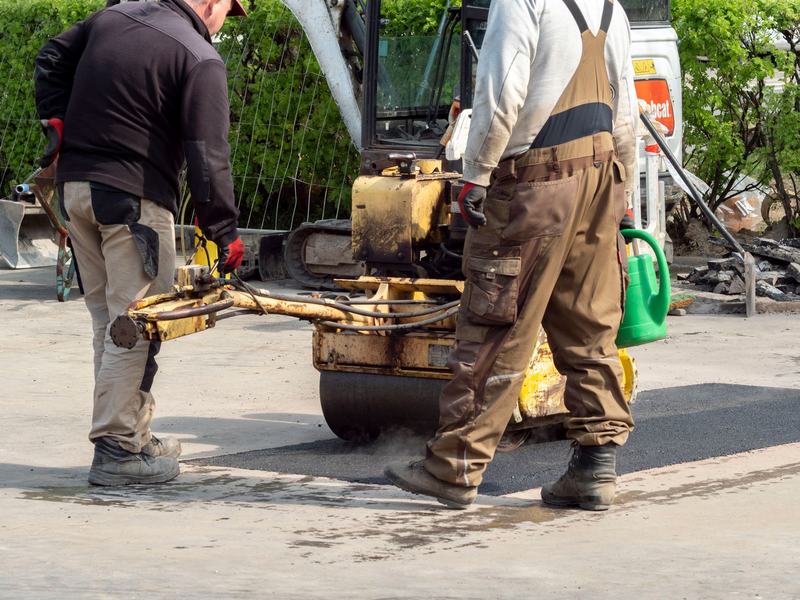
Late spring through early fall is the best window for asphalt work in Bloomington, with May through September offering the warm, dry conditions asphalt needs to cure properly.
Asphalt needs warm weather to cure right. In Bloomington, late April through September is your window for paving work, with May through early September being ideal. Air temperature should be at least 50 degrees and rising when the asphalt goes down, and nighttime lows should stay above 50 for a few days after the pour. Bloomington's average high climbs above 74 degrees from late May through September, which is exactly what asphalt likes.
Avoid paving in early spring even if you get a warm day. March and April can swing from 60 degrees one day to freezing the next, and that's hard on fresh asphalt. Late fall is risky too. October can still have decent days, but once we get into November the ground is cooling off fast and nighttime temps drop. Cold ground pulls heat out of fresh asphalt before it can compact properly.
Sealcoating has a narrower window than paving. You need temperatures above 50 degrees during the day and no rain in the forecast for at least 24 hours after application. Late May through August is the best stretch in Bloomington. June is one of our wettest months with an average of 11 days of rain, so watch the forecast and pick a dry spell.
Spring sealcoating is tricky because we get a lot of rain from late March through May. Summer is more reliable, but avoid the hottest days in July and August when sealer can dry too fast and not bond right. Early September works well too, as long as overnight lows stay above 50. Most local contractors are busy from May through August, so book early if you want work done during peak season.
Bloomington winters are hard on asphalt. We average 128 days below freezing each year, and temperatures have dropped as low as 23 degrees below zero. In January 1999, Congerville northwest of Bloomington hit 36 below, which set a state record, and Normal recorded its coldest high temperature on record at 10 below zero. Those extreme freezes crack pavement fast if water gets in.
Freeze-thaw cycles are the real enemy. Water seeps into cracks, freezes and expands overnight, then thaws during the day and seeps deeper. This happens over and over from November through March. That's why you want fresh asphalt fully cured before winter hits, and why you should sealcoat before fall. A driveway paved in late August or early September has time to harden up before the first hard freeze, which usually comes in November.
Central Illinois gets severe storms, especially in spring and early summer. May is historically the peak month for tornadoes in McLean County, with 50 recorded since 1950. In August 2026, McLean County took major storm damage from high winds and flooding, with some areas getting close to nine inches of rain in 48 hours. Those kinds of events can delay paving work for weeks.
If you're planning a paving project, build in some flexibility for weather delays. Contractors can't pour asphalt in the rain, and a week of storms in May or June can push the whole schedule back. Late summer tends to be drier and more predictable. August and early September have fewer rainy days than spring, and the weather is still warm enough for asphalt work. If a contractor tries to talk you into paving in October or later, think twice. Saving a few weeks is not worth risking a driveway that doesn't cure right before winter.
Also in our network: Asphalt paving and sealcoating in Davenport, IA, Asphalt paving and sealcoating in Cedar Rapids, IA.
Send us a few details and a photo and we will get you a free quote.
Get my free quote BLOOMINGTON